
 Pin it
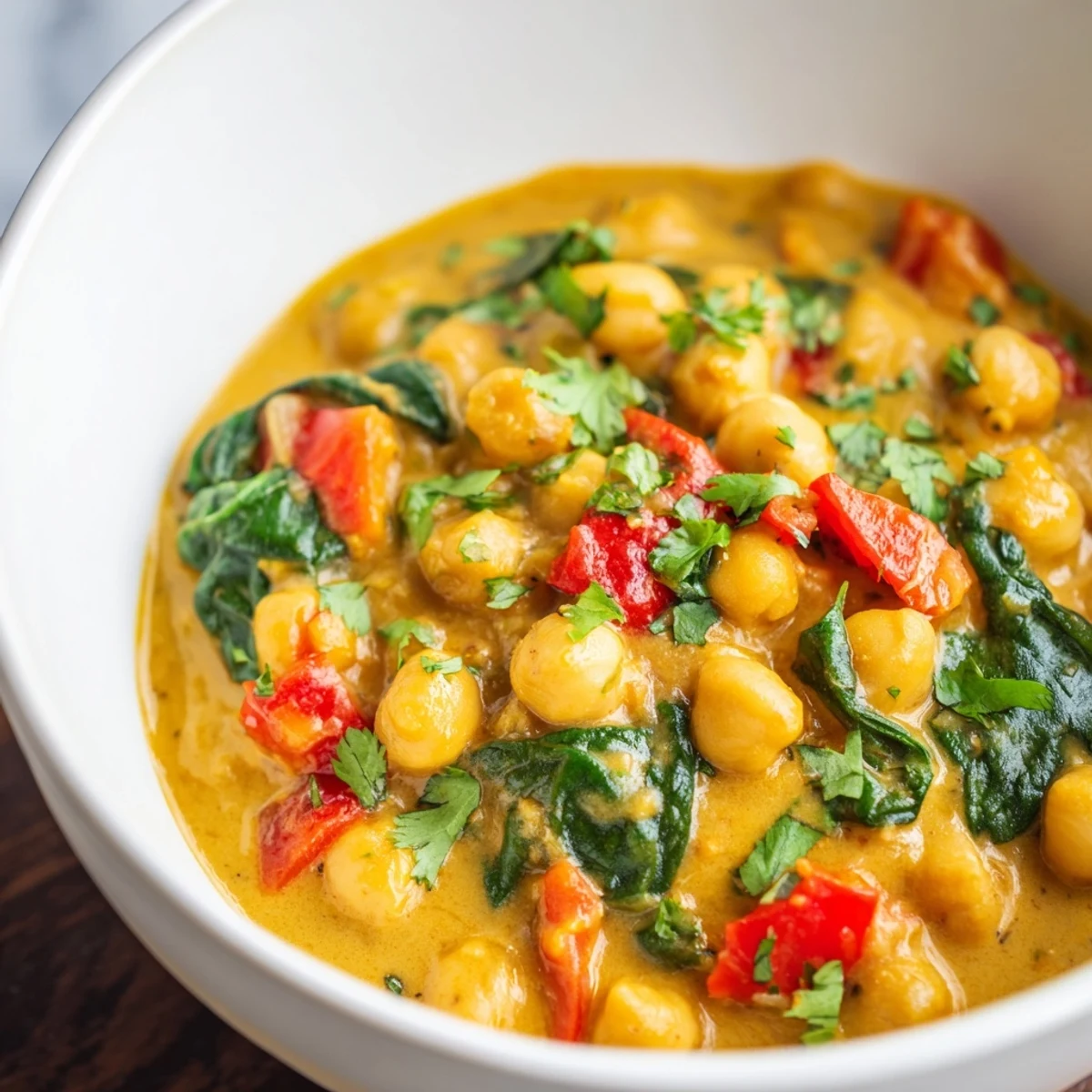
 This dish offers tender chickpeas simmered in creamy coconut milk, enriched with curry powder, cumin, turmeric, and smoked paprika. Fresh spinach and lime juice add brightness, while garlic, ginger, and bell pepper build aromatic layers. It cooks swiftly in one pot and is perfect served with rice or naan. The balanced spices and creamy texture make it a comforting, flavorful meal featuring wholesome plant-based ingredients suited to vegan and gluten-free preferences.
I discovered this curry on a Tuesday evening when my pantry was practically bare except for two cans of chickpeas and a can of coconut milk I'd been saving. What started as improvisation became something I now make whenever I need comfort in a bowl—that perfect balance of creamy, spiced, and somehow both indulgent and nourishing. The aroma that fills your kitchen is pure magic, the kind that makes everyone ask what you're cooking before they even step through the door.
I made this for a dinner party once where I had a surprise vegan guest, and watching everyone eat the same thing without fanfare or substitution felt like the best kind of win. My partner took seconds without checking if it was dairy-free—it was just that good. That night taught me that food made with genuine care doesn't announce itself; it just belongs on the table.
Ingredients
- Chickpeas (2 cans, drained and rinsed): The protein and substance that make this a real meal; rinsing them removes excess sodium and starch, giving you a cleaner sauce.
- Onion, garlic, and ginger (1 large onion, 3 cloves, 1-inch piece): This trio is your flavor foundation—take your time with the garlic and ginger so they perfume the oil before everything else arrives.
- Red bell pepper (1, diced): Adds natural sweetness and color; I prefer red for this reason, but orange works beautifully too.
- Canned diced tomatoes (1 can, 14 oz): Don't skip this—it adds body and acidity that balances the richness of the coconut milk.
- Fresh spinach (2 cups): Wilts in at the end for a final burst of earthiness and nutrients without overpowering the spices.
- Coconut milk (1 can, 14 oz, full-fat): The soul of this curry; full-fat versions create that silky texture that lighter versions just can't match.
- Vegetable broth (1/2 cup): Adjusts the consistency so you get sauce that clings to each bite without being soupy.
- Curry powder, cumin, turmeric, smoked paprika, and cayenne (2 tbsp, 1 tsp, 1/2 tsp, 1/2 tsp, 1/4 tsp): Toast these gently in the oil to unlock their warmth and complexity.
- Coconut oil or vegetable oil (2 tbsp): Coconut oil adds subtle flavor resonance; vegetable oil keeps things neutral if you prefer.
- Lime juice and fresh cilantro: The finish that brightens everything; lime is non-negotiable, cilantro is your choice.
Instructions
- Warm your oil and soften the onions:
- Heat coconut oil in your pot over medium heat until it's shimmering—this takes maybe 30 seconds. Add your chopped onion and let it sit undisturbed for a minute before stirring, giving it a chance to develop some color and sweetness, then sauté until translucent, about 3–4 minutes total.
- Build the aromatic base:
- Add minced garlic and grated ginger, stirring constantly for about 1 minute—you'll smell when it's right, that sharp fragrant edge that tells you it's activated. Add your diced bell pepper next and cook for another 2 minutes, letting everything get friendly before the spices arrive.
- Bloom the spices:
- Sprinkle curry powder, cumin, turmeric, smoked paprika, and cayenne over the vegetables, then stir everything together for about 30 seconds. This step is crucial—the heat helps release the oils in the spices and prevents them from tasting raw or bitter.
- Add tomatoes and let flavors meld:
- Pour in your canned tomatoes with all their juices and cook for 3 minutes, stirring occasionally. The tomato acid will begin breaking down the spices and creating a richer base.
- Introduce the chickpeas and coconut milk:
- Add drained chickpeas, coconut milk, and vegetable broth, stirring until everything is combined. Bring the mixture to a gentle simmer—you want bubbles at the edges, not a rolling boil.
- Simmer and let it breathe:
- Cover the pot and let it cook for 15–20 minutes, stirring occasionally. This time allows the flavors to marry and the chickpeas to absorb the sauce. The longer it simmers, the deeper the flavor becomes.
- Finish with spinach and brightness:
- Stir in fresh spinach and cook uncovered for 2–3 minutes until wilted. Squeeze in lime juice and taste for salt and pepper, adjusting to your preference—some people love more heat, so add cayenne now if you're feeling adventurous.
- Serve and celebrate:
- Ladle into bowls, top with fresh cilantro, and serve with rice, naan, or quinoa. This curry also keeps beautifully in the fridge for 3–4 days and tastes even better as the flavors deepen.
 Pin it
 There's a quiet joy in ladling this curry into bowls and watching someone take their first bite—that moment when their eyes light up and they ask for the recipe. It's simple enough to make on a random Tuesday but generous enough to feed people you care about.
Why This Curry Works for Any Occasion
This curry has become my secret weapon for weeknight dinners and unexpected guests alike. The recipe demands nothing fancy—no specialty ingredients you can't find at a regular grocery store, no complicated techniques that require years of practice. What makes it special is the slow, intentional way the spices develop and the simple respect paid to timing and temperature. Whether you're cooking for yourself after a long day or feeding a table of people with different dietary needs, this curry meets everyone where they are.
Making It Your Own
The beauty of this curry is its flexibility without losing its soul. I've made it with sweet potatoes added in during the simmer, with extra spinach and no other vegetables, with a handful of cherry tomatoes instead of canned—each version feels like a different conversation with the same old friend. Some nights I make it fiercer with extra cayenne and fresh chili; other times I keep it gentle and creamy, letting the coconut milk do most of the talking. Trust your instincts about what your pantry and your mood are asking for.
Serving and Storage
This curry tastes phenomenal with jasmine or basmati rice, pressed naan, or even quinoa if you're keeping things grain-free. Cold leftovers make an excellent lunch the next day when spooned over greens as a warm salad, or reheated gently in the pot with a splash of water if the sauce has thickened too much. It freezes beautifully for up to three months, which means you can make a double batch on a Sunday and have lunch sorted for half the week.
- Let it cool completely before storing in airtight containers to prevent condensation.
- Reheat gently on the stovetop rather than microwave so the coconut milk doesn't break.
- Taste again after reheating—flavors can mellow, so you may need to add a pinch more salt or lime juice.
 Pin it
 This curry has become my answer to the question, 'What should I cook tonight?' It's the meal that never feels boring, the one that makes your kitchen smell like somewhere warm and welcoming. Make it once and you'll understand why it keeps coming back to your table.
Recipe Q&A
- → What spices enhance the flavor in this chickpea dish?
-
The mix of curry powder, cumin, turmeric, smoked paprika, and optional cayenne pepper creates a warm, aromatic profile that deepens the dish's taste.
- → Can I substitute the spinach with other greens?
-
Yes, kale or Swiss chard are excellent alternatives that hold up well during cooking and provide similar nutritional benefits.
- → How does coconut milk affect the texture?
-
Coconut milk adds a creamy richness and smooth consistency, balancing the spices and tender legumes beautifully.
- → Is this dish suitable for gluten-free diets?
-
Yes, all ingredients used are naturally gluten-free; just ensure any additional sides or broths are labeled gluten-free.
- → What are good serving suggestions with this curry?
-
Steamed basmati rice, warm naan, or quinoa complement the flavors and soak up the creamy sauce perfectly.
- → How do I increase the heat level if desired?
-
Add extra cayenne pepper or include chopped fresh chili during cooking for a spicier kick.