
 Pin it
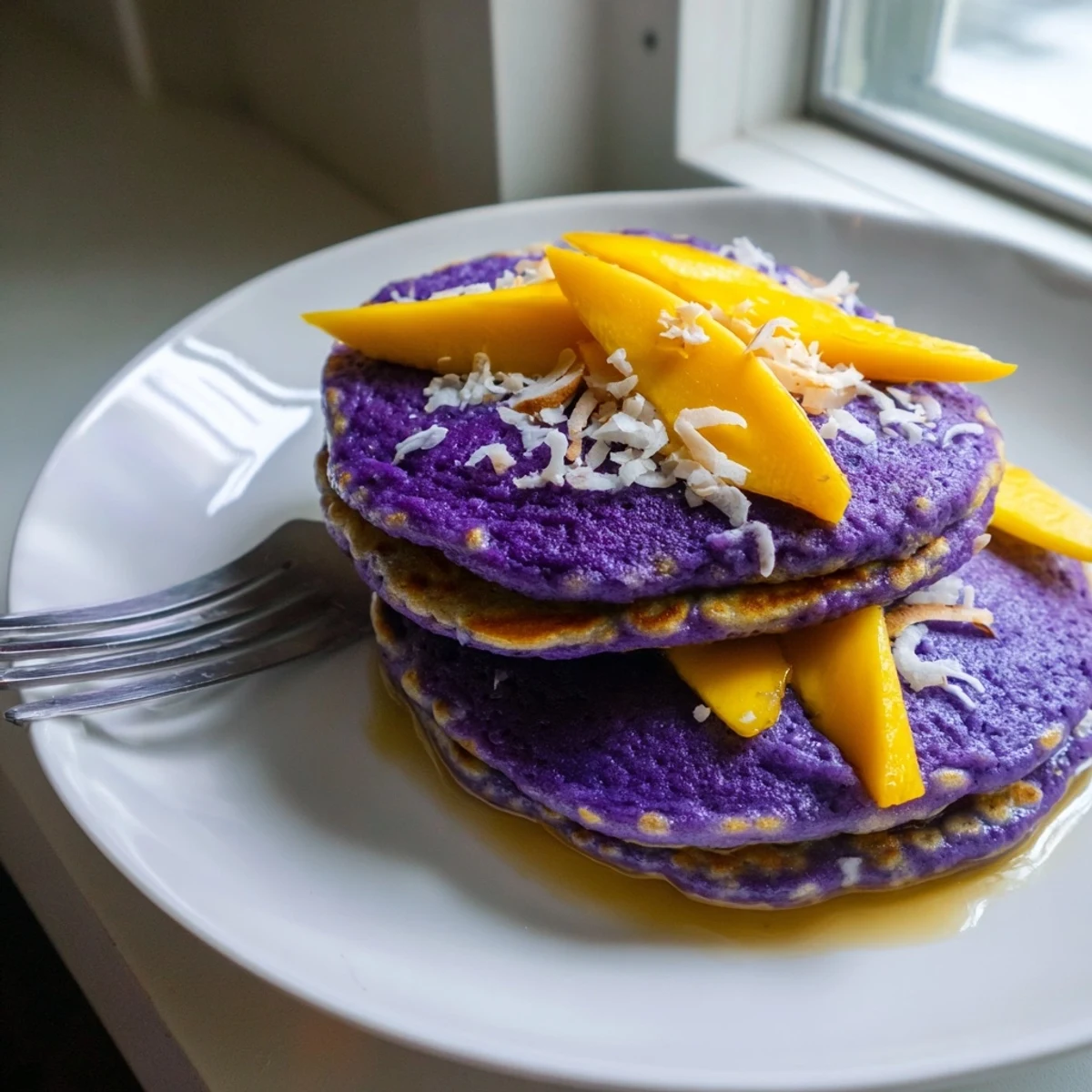
 These vibrant purple treats combine the nutty, vanilla-like sweetness of Filipino ube with the irresistibly chewy texture of Japanese mochi. Sweet rice flour creates that signature bounce, while ube halaya lends stunning color and creamy coconut flavor. The batter comes together quickly in one bowl, cooks up golden with delicate crisp edges, and stays wonderfully tender inside. Best enjoyed warm with condensed milk, fresh mango, toasted coconut, or maple syrup for an elevated breakfast experience.
My college roommate asked why I was buying purple potato jam at 3 AM, and honestly, I didn't have a good answer until I made these pancakes the next morning. The whole apartment smelled like vanilla and something earthy and sweet that nobody could quite place. Now whenever I see ube halaya in the Asian market, I grab two jars instead of one.
Last summer I made these for a friend who swore she hated purple food, and she ate three pancakes while asking if I could teach her how to make them. Something about the bounce of the mochi combined with that distinctive ube flavor just wins people over immediately.
Ingredients
- Sweet rice flour (mochiko): This is what creates that signature chewy texture, and regular flour just cannot replicate it
- Ube halaya: The jam itself carries all the flavor, so buy the good stuff from a Filipino market if you can find it
- Baking powder: Gives just enough lift so they're not dense, though they will still be heavier than regular pancakes
- Milk: Whole milk creates the richest batter, though coconut milk works beautifully if you want more tropical vibes
- Eggs: Room temperature eggs incorporate better and create a more uniform texture
- Unsalted butter: Melted and slightly cooled so it does not scramble the eggs when you whisk everything together
- Vanilla extract: Ube and vanilla are best friends, so do not skip this even if it seems unnecessary
Instructions
- Whisk the dry foundation:
- Combine your sweet rice flour, regular flour, sugar, baking powder, and salt in a large bowl until everything is evenly distributed
- Blend the wet mixture:
- In another bowl, whisk the milk, ube halaya, eggs, melted butter, and vanilla until the jam dissolves completely and the mixture turns a smooth lavender
- Combine carefully:
- Pour the wet ingredients into the dry and mix just until no flour streaks remain, though some small lumps are perfectly fine
- Prep your cooking surface:
- Heat a nonstick skillet over medium-low and add just enough butter to coat the bottom
- Form your pancakes:
- Scoop about 1/4 cup of batter per pancake and use the back of your spoon to gently spread it into a circle since the batter is thick
- Watch for the signs:
- Cook for 2 to 3 minutes until bubbles appear and edges look set, then flip and cook another 1 to 2 minutes until golden
- Keep them warm:
- Set finished pancakes on a plate in a low oven while you finish the rest of the batter
 Pin it
 My niece now calls these princess pancakes and requests them every time she sleeps over, which is maybe the highest compliment a recipe can receive from a seven year old.
Getting The Perfect Texture
The secret is not overworking the batter once you combine the wet and dry ingredients. Overmixing develops protein and makes the pancakes tough instead of pleasantly chewy. A few streaks of flour are better than an overmixed batter.
Making Ahead
You can mix the dry and wet ingredients separately the night before and store them in the fridge. Combine them in the morning, and let the batter sit for about 10 minutes before cooking to let the rice flour hydrate properly.
Topping Ideas
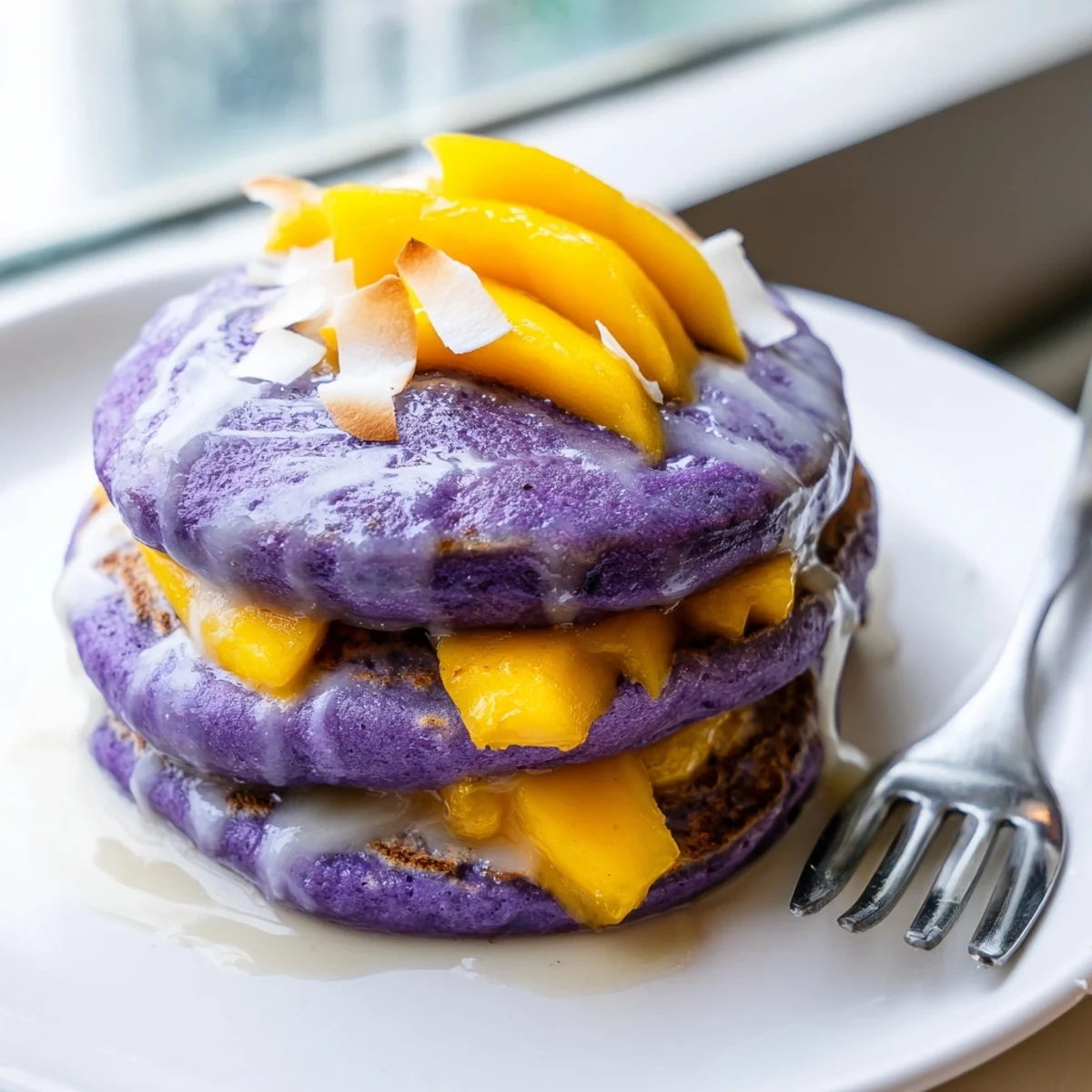
Sweetened condensed milk drizzled over warm pancakes is absolutely next level, though it will push these into dessert territory. Fresh mango slices balance the sweetness beautifully. Toasted coconut flakes add crunch and complement the tropical flavors. A little maple syrup never hurt anyone either.
- Let the pancakes rest a minute before topping so they hold onto syrups better
- Warm any fruit toppings slightly to match the temperature of the pancakes
- A pinch of sea salt on top cuts through all the sweetness
 Pin it
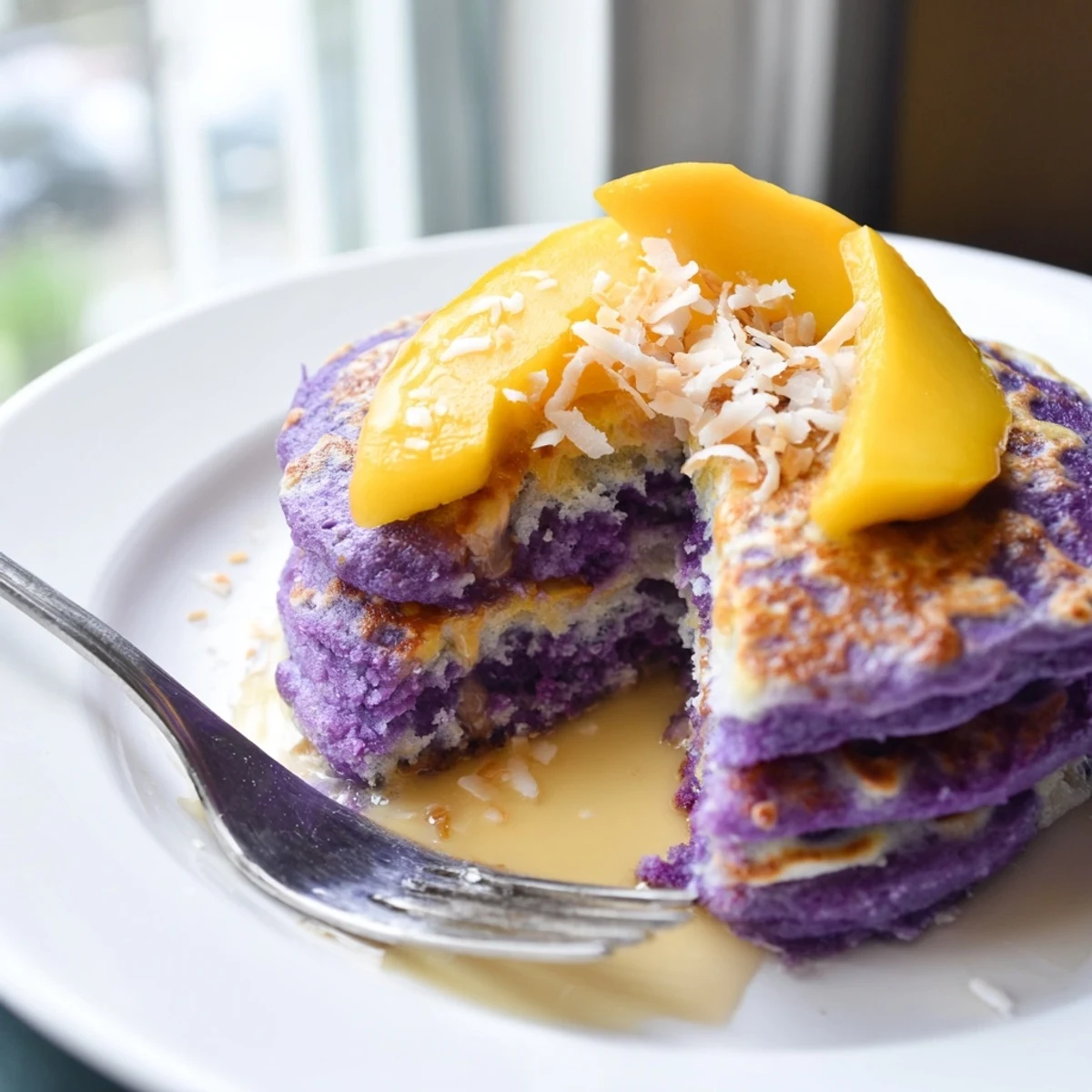
 Something about purple pancakes just makes the whole day feel more magical, no matter what is waiting on the other side of breakfast.
Recipe Q&A
- → What gives these pancakes their purple color?
-
The vibrant purple hue comes from ube halaya (ube jam), a sweet Filipino yam paste made from purple yam. This also provides the characteristic nutty, vanilla-like flavor with subtle coconut notes.
- → Why is mochiko flour used instead of regular flour?
-
Sweet rice flour (mochiko) creates the signature chewy, bouncy texture that distinguishes these from regular pancakes. It's glutinous rice that becomes wonderfully elastic when cooked, giving that irresistible mochi-like mouthfeel.
- → Can I make these completely gluten-free?
-
Absolutely. Simply substitute the 2 tablespoons of all-purpose flour with additional mochiko. The result remains perfectly textured while being completely gluten-free and safe for those with gluten sensitivities.
- → Why is the batter thick and sticky?
-
The thick consistency is intentional and necessary for achieving the chewy texture. Sweet rice flour absorbs liquid differently than wheat flour, creating a dense batter that spreads into thick, fluffy rounds with that signature mochi bounce.
- → What toppings work best with ube mochi pancakes?
-
Fresh mango slices complement the creamy ube flavor beautifully, while sweetened condensed milk adds richness. Toasted coconut flakes enhance the tropical notes, and maple syrup provides classic sweetness without overpowering the delicate ube flavor.
- → How should I store and reheat leftovers?
-
These are best enjoyed fresh and warm when the chewy texture is at its peak. If you have leftovers, store in an airtight container and reheat in a toaster or skillet. Avoid microwaving as it can make them gummy rather than pleasantly chewy.