
 Pin it
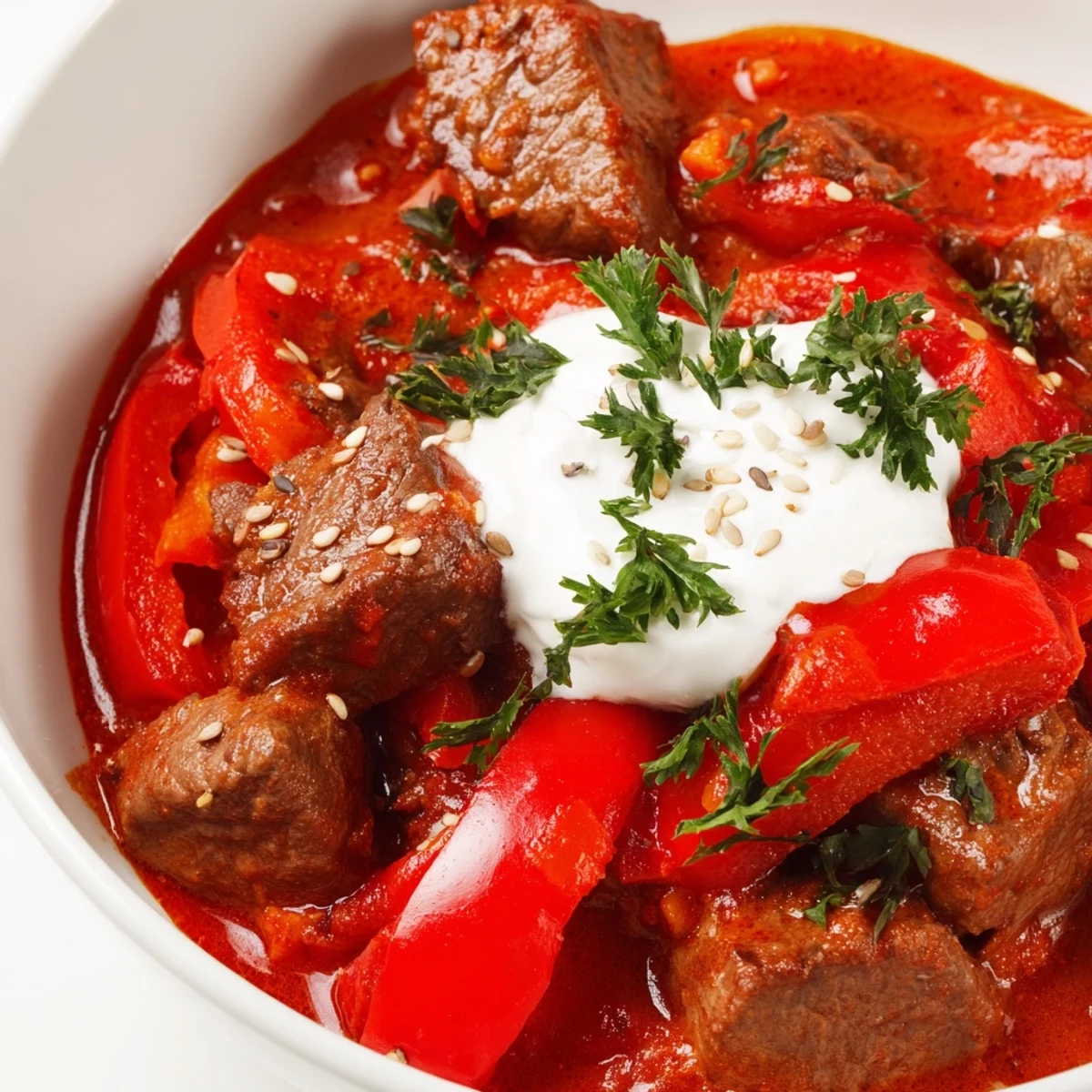
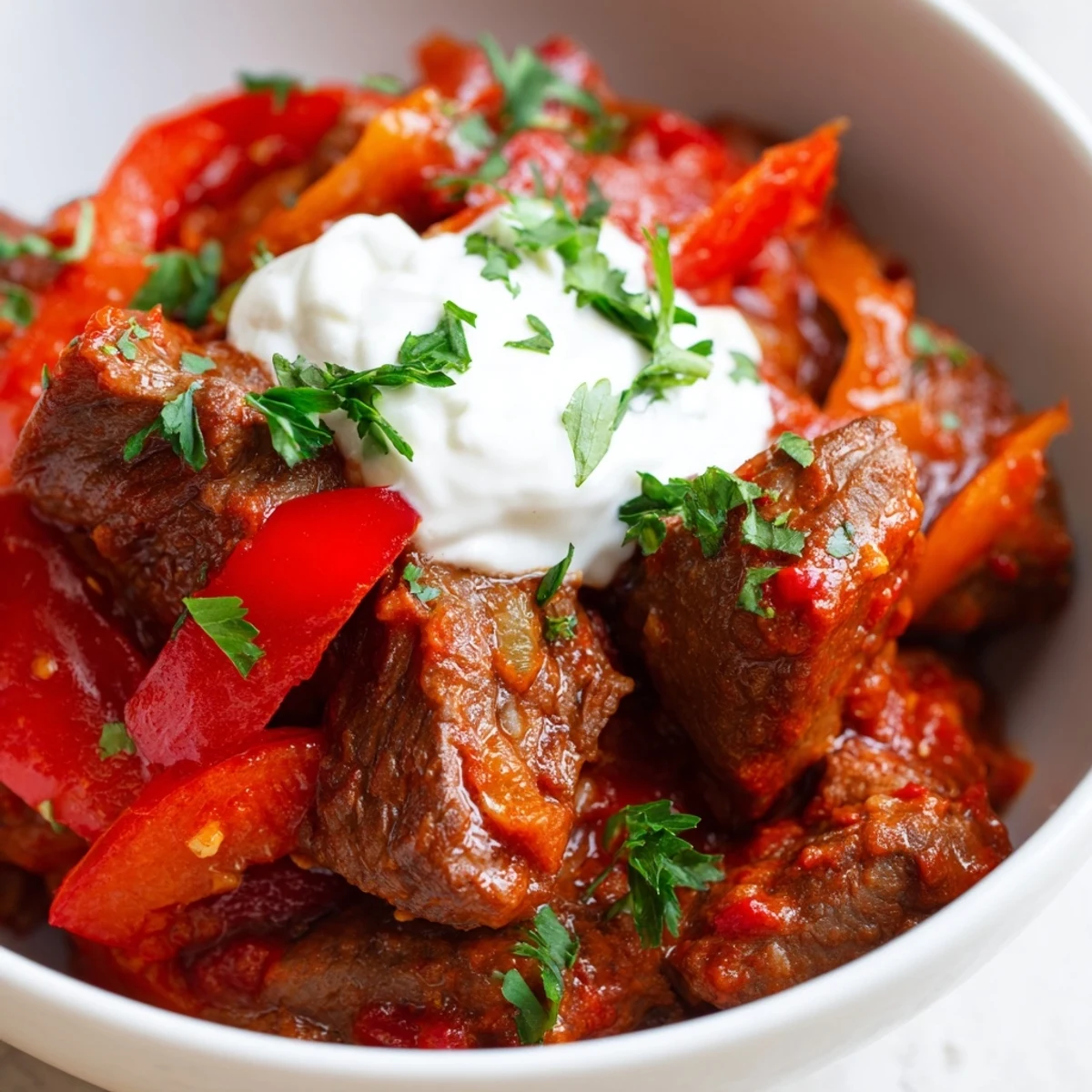
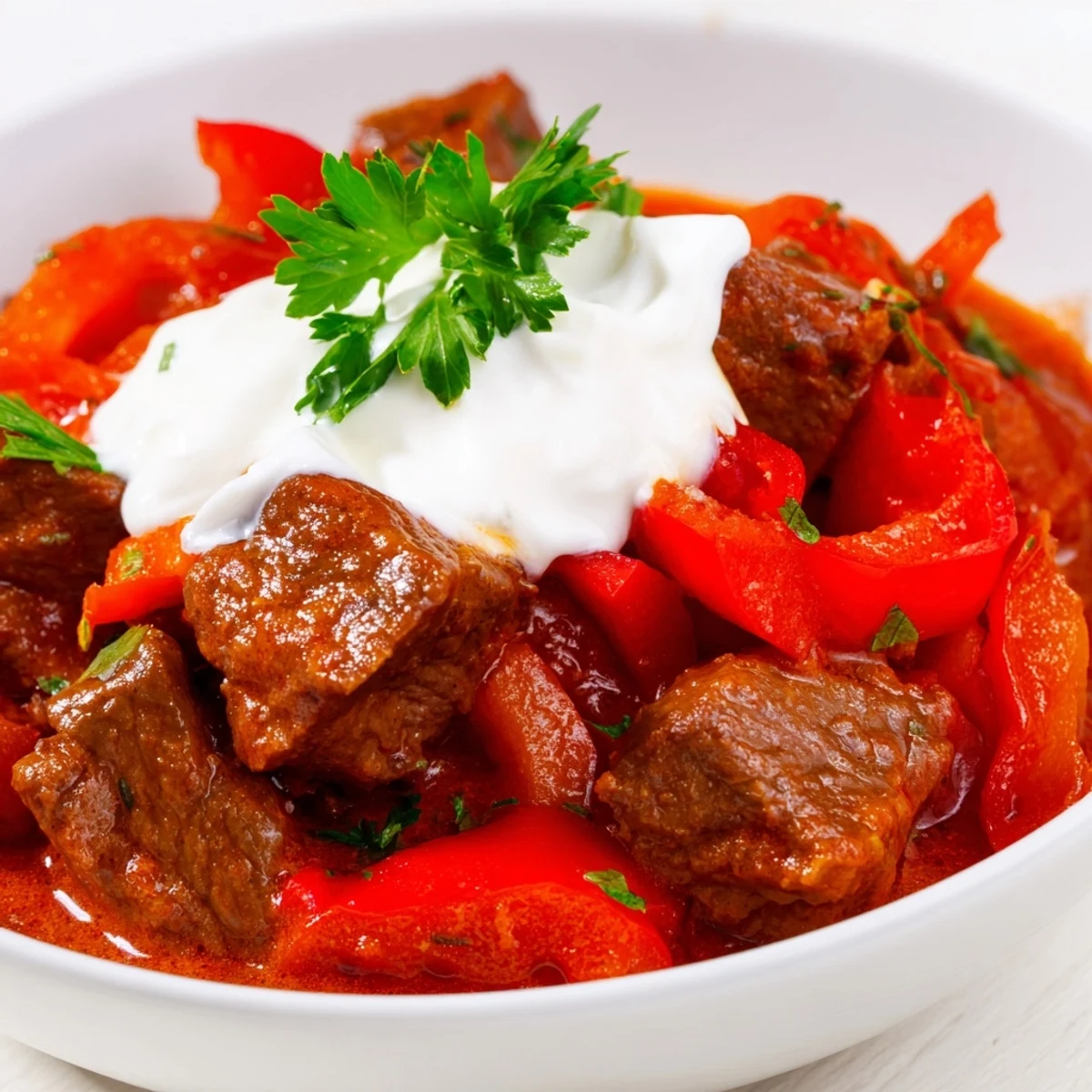
 This Hungarian-inspired dish features tender beef chunks slowly cooked with sweet bell peppers, onions, and a blend of paprika and spices. Simmered to perfection, the stew offers deep, rich flavors with a balance of savory and slightly sweet notes. Garnished with fresh parsley and served warm, it pairs wonderfully with rustic bread or buttered noodles.
The preparation involves browning the beef, sautéing aromatics, and simmering everything gently to develop complex layers of taste. Optional additions like sour cream and a flour slurry enhance creaminess and thickness. This comforting dish is perfect for a wholesome main course that satisfies hearty appetites.
My first real goulash moment came on a cold evening when a Hungarian neighbor casually handed me her recipe on a scrap of paper—no measurements, just ingredient names and the note 'cook slow, taste often.' What started as a nervous attempt became one of those dishes that fills your kitchen with such an honest, comforting smell that you know it's going to be good. That first pot taught me that goulash isn't fussy; it's forgiving and deeply rewarding.
Years later I made this for friends who were skeptical about 'stew' until they tasted it—watching someone's face change when they realize goulash is nothing like what they expected feels like a small magic. That's when I understood this dish bridges the gap between simple and impressive, between rustic comfort and genuine elegance.
Ingredients
- Beef chuck (800 g / 1.75 lbs), cut into 2.5 cm cubes: Chuck is where all the flavor lives; it breaks down into tender richness during the long simmer, so don't swap it for a leaner cut.
- Large onions (2), finely chopped: They'll dissolve almost completely into the sauce, building a sweet, savory foundation that holds everything together.
- Bell peppers (3, red, yellow, or green), sliced: Sweet varieties soften beautifully and add natural sweetness; green peppers stay slightly more assertive if you prefer that bite.
- Garlic (3 cloves), minced: Mince it fine so it melts into the sauce rather than announcing itself in big pieces.
- Tomatoes (2 medium, chopped, or 1 cup canned diced): Fresh tomatoes add brightness, but canned works just as well and often tastes more concentrated.
- Sweet Hungarian paprika (2 tbsp): This is the soul of the dish—genuine Hungarian paprika has a warmth that basic paprika can't match, so it's worth seeking out.
- Caraway seeds (1 tsp): They add a subtle earthiness that whispers rather than shouts; if you can't find them, the goulash is still excellent without.
- Dried marjoram (1 tsp): A quiet herb that threads through the whole pot, giving it an almost herbal backbone.
- Bay leaf (1): Always remember to fish it out before serving or you'll regret a surprise crunch.
- Black pepper (1/2 tsp, freshly ground) and salt (1.5 tsp): Start here and adjust at the end; the long cooking time softens salt's edge.
- Vegetable oil (3 tbsp): High heat oil for browning the beef without smoking out your kitchen.
- Beef broth (500 ml / 2 cups): Good quality broth lifts the whole dish, but even modest broth becomes rich after two hours of simmering.
- Tomato paste (2 tbsp): This concentrate deepens the color and adds a savory punch that fresh tomatoes alone can't deliver.
- Flour (1 tbsp, optional, gluten-free if needed): Only if you want a thicker sauce; the goulash is lovely either way.
- Sour cream (2 tbsp, optional) and fresh parsley (for garnish): A dollop of sour cream on top cools and enriches each spoonful, while parsley adds a bright, fresh finish.
Instructions
- Brown the beef:
- Get your pot screaming hot with oil, then add beef in batches so each piece gets a real, golden crust—don't crowd the pot or you'll steam instead of sear. This takes maybe 8–10 minutes total and makes all the difference in depth of flavor.
- Build the base with onions:
- Once the beef is out, the same pot goes to work on the onions, which should turn soft and pale gold in about 5–7 minutes. You'll see all those caramelized bits stuck to the bottom, and that's gold in a pot.
- Bloom the spices:
- Add garlic, paprika, caraway, marjoram, and tomato paste, stirring for just one minute so the spices release their oils and perfume the oil itself. This tiny step is where the dish gets its personality.
- Bring it all together:
- Return the beef, add tomatoes, bay leaf, salt, and pepper, then pour in the broth while scraping up every bit of flavor stuck to the pot. The mixture should come together into something that looks like the beginning of something delicious.
- Low and slow:
- Cover and let it simmer gently on low heat for 90 minutes, stirring only occasionally so the steam can do its work. The kitchen will smell so good you'll want to cancel all your plans.
- Add the peppers:
- Slice them in and let them cook uncovered for 30–40 minutes, which allows the liquid to reduce slightly while the peppers go soft and almost sweet. This is when you taste and adjust for salt and pepper.
- Thicken if you like:
- If you want a thicker sauce, mix flour with a little cold water to make a smooth paste, stir it in, and simmer for 5 more minutes. Otherwise, skip it entirely—both versions are right.
- Finish and serve:
- Remove the bay leaf, taste one more time, and serve hot with a spoonful of sour cream and a scatter of parsley if you have it.
 Pin it
 There's a moment, usually around the 90-minute mark, when you lift the lid and the steam releases just enough for you to see the beef is so tender a wooden spoon breaks it apart—that's when you know you're doing it right. That's also when everyone in the house suddenly materializes in the kitchen, drawn by pure instinct.
Why This Dish Feels Special
Goulash sits at the crossroads of all the things we love about cooking: it's cheap, honest, and somehow both rustic and refined at once. The long, gentle cooking transforms humble beef chuck into something tender enough for celebration, while the paprika and spices give it a personality that plain stew could never claim. What started as peasant food in Hungary became one of those dishes that restaurants charge real money for, and the truth is you're making it better at home.
Serving and Pairing
The tradition says serve it with dumplings or egg noodles, and that's absolutely right—something soft to soak up the sauce is essential. But I've also had it with crusty bread torn into pieces, spooned over buttered polenta, or even just in a bowl with nothing but a spoon and someone good to talk to. The sauce is rich enough that it doesn't need much company; let the goulash be the star.
Small Secrets That Make the Difference
A splash of dry red wine stirred in with the broth lifts the whole thing in a way that's subtle but undeniable—it's not noticeable as wine, just as depth. Some cooks swear by smoked paprika instead of sweet paprika, and if you want something with more edge and less sweetness, that swap is perfect. The night before is always better than the night you make it, so feel completely free to cook this a day ahead and simply reheat; the flavors meld and settle into something even more cohesive.
- Caraway seeds can be omitted entirely if you're unsure about them; the goulash is delicious without.
- A dollop of sour cream isn't just garnish—it's necessary for anyone who likes richness and a slight cooling effect with each bite.
- Leftover goulash freezes beautifully and actually seems to improve over time, making this dish a gift to your future self.
 Pin it
 This goulash is the kind of dish that makes you feel like a real cook, even if you've never made it before—because the technique is simply patience, and the ingredients do most of the talking. Make it once and it becomes yours, a recipe you'll return to again and again.
Recipe Q&A
- → What type of beef is best for this stew?
-
Beef chuck cut into 1-inch cubes is ideal due to its marbling and tenderness after slow cooking.
- → Can I use different bell pepper colors?
-
Yes, mixing red, yellow, and green bell peppers adds sweetness and vibrant color to the stew.
- → How can I thicken the sauce naturally?
-
Mixing a tablespoon of flour with water to create a slurry and stirring it in near the end thickens the sauce smoothly.
- → What spices give the stew its signature flavor?
-
Sweet Hungarian paprika, caraway seeds, and marjoram provide the characteristic aromatic and slightly smoky taste.
- → What are good side dishes to serve with this stew?
-
Rustic bread, buttered noodles, or dumplings complement the stew’s rich flavors beautifully.
- → Is it possible to add depth to the broth?
-
Adding a splash of dry red wine to the broth enhances complexity and richness.