
 Pin it
 Master the art of laminated dough at home with this air fryer method. The process creates distinct buttery layers through strategic folding and chilling, resulting in that signature crescent shape with shatteringly crisp exterior and tender, airy interior.
The air fryer circulates hot air evenly, producing deep golden color and consistent texture without uneven hot spots. You'll achieve professional-looking pastries with minimal effort—no fancy equipment required beyond your trusty air fryer and rolling pin.
The dough requires patience through chilling periods, but hands-on time remains manageable. The result rivals any bakery quality, delivering that satisfying flake-to-buttery-crumb ratio in every warm bite.
Last Sunday, my apartment smelled like a French bakery for the first time ever. I had been skeptical about making croissants in an air fryer—surely that was cheating? But watching those golden crescents puff up through the little window changed everything. The butter hit the heating element and filled my tiny kitchen with the kind of warmth that makes neighbors knock on your door.
My sister visited last month and demanded I recreate the croissants from our Paris trip. I explained that laminating dough normally takes hours and tears and doubtful moments. But then I remembered my air fryer experiment. We made them together on her last morning, flour everywhere, music playing, coffee brewing. She took one bite and said these were better than the ones from that little cafe near the Eiffel Tower.
Ingredients
- All-purpose flour: This creates the structure for all those buttery layers
- Active dry yeast: The magic that makes dough rise and become light instead of dense
- Unsalted butter: Cold butter is non negotiable for creating those distinct flaky layers
- Warm milk: Should feel like a comfortable bath temperature, around 110°F
- Eggs: One goes into the dough for richness, one becomes the golden wash on top
- Granulated sugar: Just enough to balance the savory butter without making it dessert sweet
- Salt: Essential for flavor depth and strengthening the gluten structure
Instructions
- Wake up the yeast:
- Dissolve the yeast in warm milk with a teaspoon of sugar and wait five minutes until it looks foamy on top. This step tells you the yeast is alive and ready to work its magic.
- Mix the dough:
- Combine flour, sugar, and salt in a large bowl, then add melted butter, egg, and the yeast mixture. Stir until everything comes together, then knead for about five minutes until the dough feels smooth and elastic.
- Chill out:
- Form the dough into a ball, cover it, and refrigerate for one hour. Cold dough handles better and keeps the butter from melting too quickly during rolling.
- Prepare the butter block:
- Pound cold butter between parchment paper until it forms a six inch square. Keep it chilled and firm—this is the secret to distinct layers instead of a greasy mess.
- First fold:
- Roll the dough into a twelve inch square and place the butter in the center. Fold the dough over the butter like an envelope and seal the edges so no butter escapes.
- Create layers:
- Roll into a sixteen by eight inch rectangle, fold into thirds, turn 90 degrees, roll again, and fold once more. Chill for thirty minutes between each fold to keep the butter firm.
- Shape the croissants:
- Roll the chilled dough into a rectangle and cut into eight triangles. Starting from the wide end, roll each triangle toward the tip and curve slightly into that classic crescent shape.
- Let them rise:
- Place the shaped croissants on a lined tray, cover, and let them puff up in a warm spot for one to two hours. They should look visibly puffy and hold an indentation when gently pressed.
- Give them a golden coat:
- Brush the risen croissants with beaten egg wash, being careful not to let the egg drip onto the tray where it can glue them down during cooking.
- Air fry to perfection:
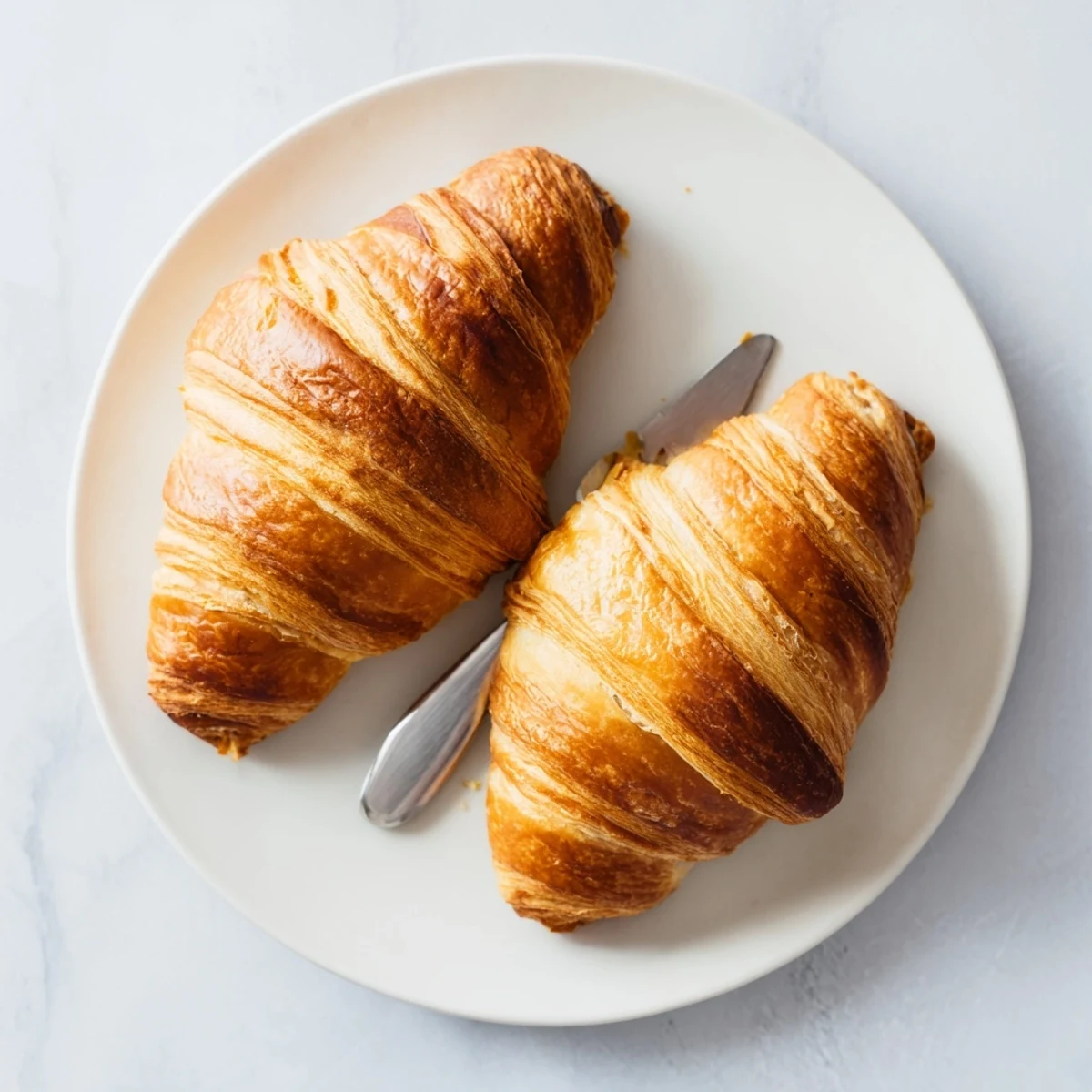
- Preheat the air fryer to 320°F and cook two to four croissants at a time for eight to ten minutes until deep golden brown. Do not overcrowd the basket or they will steam instead of crisp up.
 Pin it
 The morning I finally mastered these, I ate one standing at the counter, still too hot to touch properly. The outside shattered into flakes on the plate and the inside was impossibly tender. I called my mom immediately and said I understood why French bakers wake up so early.
Getting The Rise Right
The proofing time makes all the difference between a light croissant and a heavy disappointment. I once got impatient and only let them rise for thirty minutes. They came out like little buttery bricks. Now I turn my oven light on and let them proof inside—the gentle warmth creates the perfect environment without overheating the dough.
Working With Air Fryer Batches
Trying to cook all eight croissants at once in a standard air fryer is a mistake I learned the hard way. They need space for hot air to circulate completely around each one. I cook them in three or four batches now, keeping the already cooked ones warm in a low oven while the rest finish. The patience pays off in even browning.
When To Serve And Store
Croissants are at their absolute best within an hour of coming out of the air fryer. That window when they are still slightly warm is pure magic. If you somehow have leftovers, wrap them individually and freeze rather than refrigerating—fridge turns them stale overnight while freezing preserves that fresh baked quality. A quick reheat at 300°F brings them back to life.
- Split and toast day old croissants to use as sandwich bread
- Fill leftovers with ham and cheese for a quick croque madame
- Turn slightly stale croissants into bread pudding or pain perdu
 Pin it
 There is something deeply satisfying about pulling homemade croissants from your own air fryer. They are not just food—they are proof that you can create something extraordinary in a small kitchen with simple tools.
Recipe Q&A
- → Can I make the dough ahead of time?
-
Absolutely. Prepare the dough through the final folding step, wrap tightly, and refrigerate overnight. Let it warm slightly at room temperature for 15 minutes before rolling and shaping.
- → Why is my butter leaking during folding?
-
The butter likely softened too much. Keep everything cold—work quickly, chill frequently, and maintain cool room temperature. If butter becomes soft, wrap and refrigerate for 20 minutes before continuing.
- → Can I freeze unbaked croissants?
-
Yes. Shape the croissants, place on a baking sheet, and freeze until solid. Transfer to a freezer bag for up to 3 weeks. Thaw in the refrigerator overnight, let rise, then air fry as directed.
- → How do I know when they're done cooking?
-
Look for deep golden-brown color on all sides. The croissants should feel light when lifted and have visible layers when gently squeezed. Internal temperature should reach 190-200°F.
- → Can I use frozen puff pastry instead?
-
While traditional homemade dough yields superior flavor and texture, frozen puff pastry works in a pinch. Thaw according to package directions, cut into triangles, roll, and air fry at 320°F for 6-8 minutes.
- → What's the best way to reheat leftovers?
-
Place in air fryer at 300°F for 3-4 minutes until warmed through and crisp. Avoid microwaving, which makes them soggy. For oven reheating, bake at 350°F for 5-7 minutes.