
 Pin it
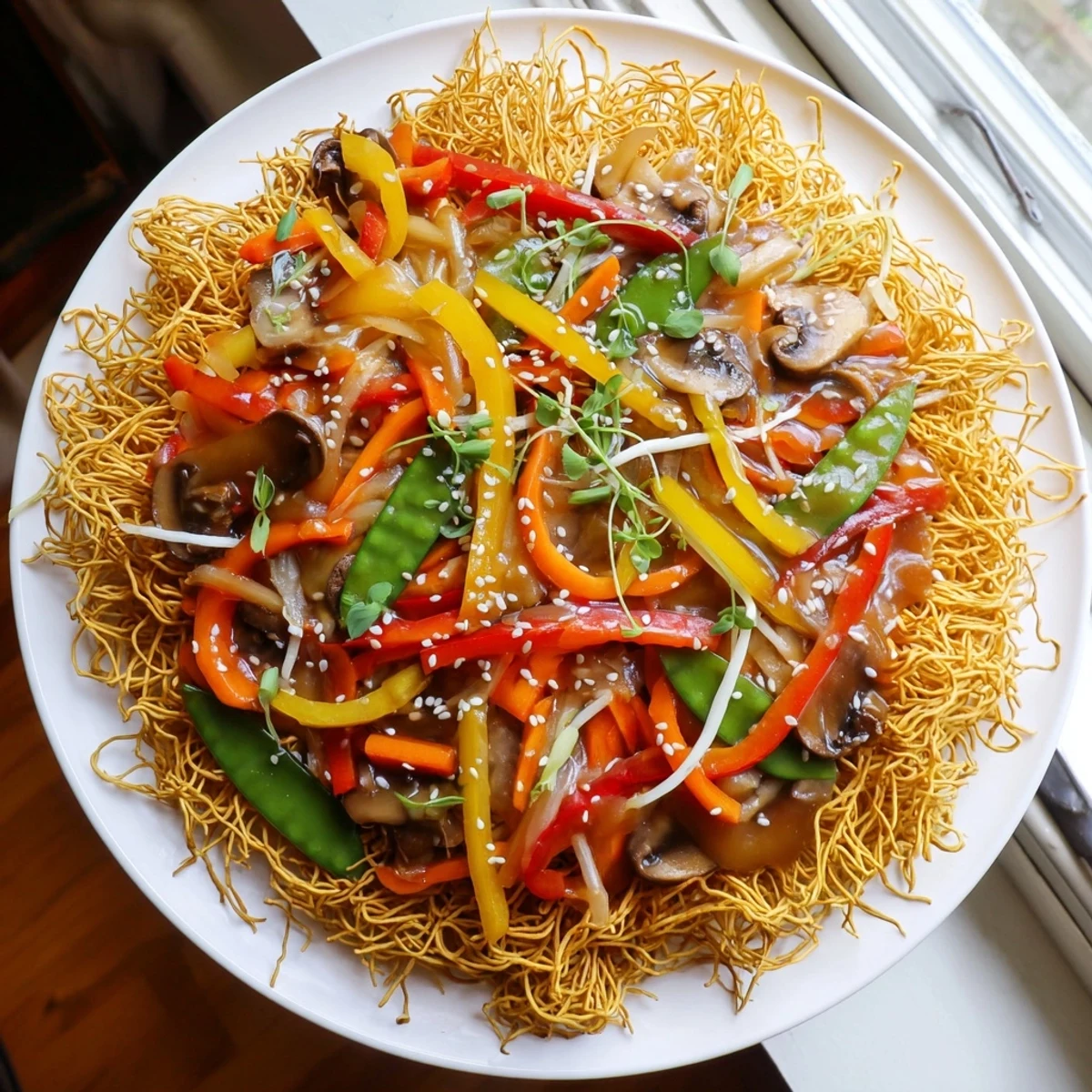
 This vibrant dish combines golden fried noodles with a colorful medley of stir-fried vegetables including bell peppers, carrots, snow peas, and mushrooms. The savory sauce blends soy, oyster, and hoisin sauces with aromatic garlic and ginger. Ready in just 40 minutes, this vegetarian main delivers satisfying crunch and bold flavors perfect for busy weeknights.
The kitchen smelled like my college apartment in Chinatown, where the wok lady below our window would clang her metal spatula against the iron pan every Tuesday night. I could never quite replicate that singed noodle fragrance until I learned the secret of crisping them first, then letting the vegetables shine on top. Now this recipe is my go-to when I want something that feels both indulgent and nourishing, the kind of meal that makes you pause between bites.
Last month my roommate walked in while I was frying the noodles, her eyes widening as she watched me flip an entire golden noodle cake in the pan. We ate standing up at the counter, too impatient to bother with plates, and she kept asking why restaurant chow mein never tasted this alive. Now she texts me every Tuesday morning asking if it is noodle night again.
Ingredients
- 200 g dried chow mein noodles: These thin wheat noodles crisp up beautifully and hold their texture even under the sauce
- 2 tbsp vegetable oil: Split between frying the noodles and stir-frying the vegetables
- 1 medium red bell pepper, thinly sliced: Adds sweetness and that gorgeous pop of red color
- 1 medium carrot, julienned: Cut them into thin matchsticks so they cook quickly and stay slightly crunchy
- 100 g snow peas, trimmed: Their sweetness balances the savory sauce perfectly
- 100 g shiitake or button mushrooms, sliced: Shiitakes give you that earthy umami depth but button mushrooms work beautifully too
- 1 small yellow onion, thinly sliced: They caramelize slightly as they stir-fry adding another layer of sweetness
- 1 cup bean sprouts: Add these at the very end so they stay crisp and fresh
- 2 spring onions, sliced: Save some for garnish to add a fresh bite on top
- 3 tbsp soy sauce: The salty foundation of our sauce
- 1 tbsp oyster sauce: Look for vegetarian versions if needed, this adds deep savory richness
- 1 tbsp hoisin sauce: Gives you that gorgeous glossy finish and subtle sweetness
- 1 tbsp sesame oil: A little goes a long way for that nutty aroma
- 1 tsp sugar: Just enough to round out all the salty elements
- 2 cloves garlic, minced: Fresh garlic makes such a difference here
- 1 tsp fresh ginger, grated: Peel it first then grate directly into your sauce bowl
- 2 tbsp water: Thins the sauce just enough so it coats everything beautifully
- 1 tsp cornstarch: This is what makes the sauce cling to every strand of noodle and vegetable
- 1 tbsp toasted sesame seeds: Optional but they add such a nice crunch and nuttiness
- Fresh coriander leaves: Scatter them on top for a burst of herbal freshness
Instructions
- Cook and prep the noodles:
- Boil the chow mein noodles according to package directions, drain immediately, and rinse thoroughly with cold water to stop the cooking and wash away excess starch
- Create the crispy noodle cake:
- Heat 1 tablespoon of oil in your largest skillet or wok over medium-high heat, spread the cooked noodles in an even layer, and let them fry undisturbed for 4 to 5 minutes until a deep golden crust forms on the bottom
- Flip and crisp the second side:
- Carefully flip the entire noodle cake and fry for another 2 to 3 minutes until that side is golden and crispy too, then transfer to a plate and set aside
- Whisk together the sauce:
- Combine the soy sauce, oyster sauce, hoisin sauce, sesame oil, sugar, garlic, ginger, water, and cornstarch in a small bowl until the cornstarch is completely dissolved
- Stir-fry the aromatic vegetables:
- Wipe out your skillet, heat the remaining oil over high heat, and stir-fry the onions and carrots for 2 minutes until they start to soften
- Add the remaining vegetables:
- Toss in the bell pepper, mushrooms, and snow peas, stir-frying for another 3 to 4 minutes until they are tender but still vibrant and crisp
- Thicken the sauce:
- Pour the sauce over the vegetables and stir constantly for about 1 minute as it bubbles and thickens into a glossy coating
- Add the fresh elements:
- Stir in the bean sprouts and half the spring onions, tossing just until combined and slightly warmed through
- Assemble and serve:
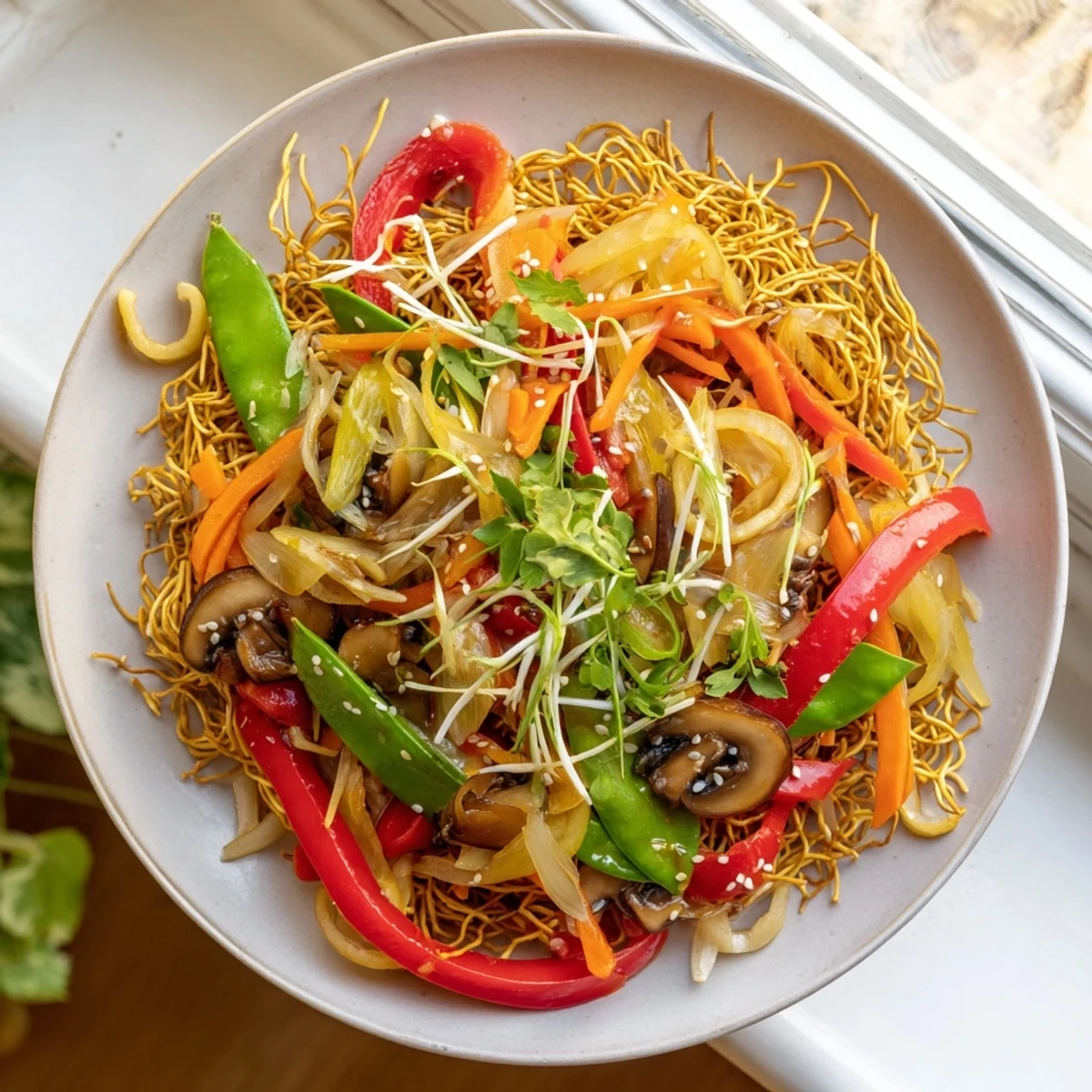
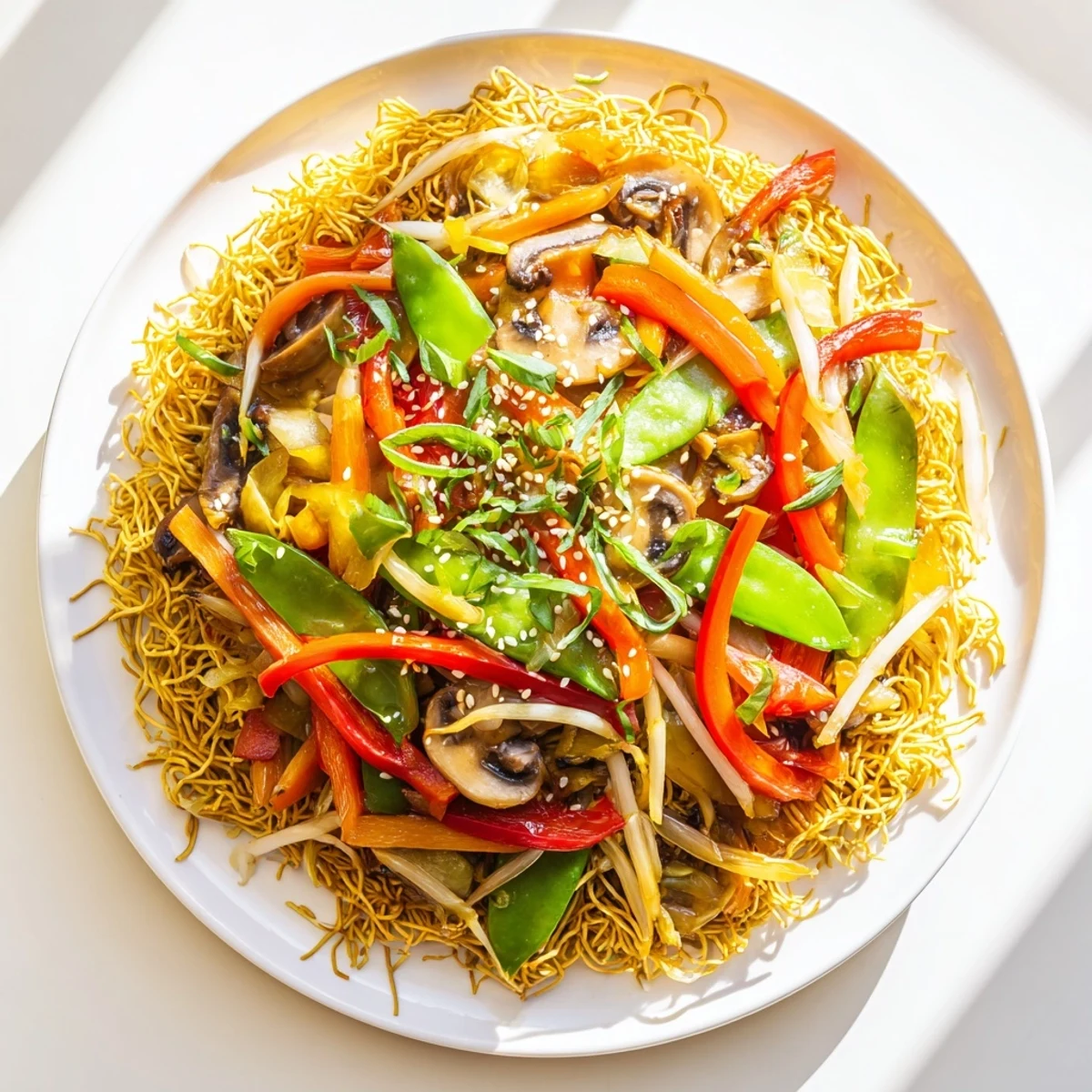
- Arrange the crispy noodle cake on a serving platter, spoon the sauced vegetables generously over the top, and scatter with the remaining spring onions, sesame seeds, and fresh coriander
 Pin it
 My mother-in-law tried this recipe last weekend and called me immediately afterward, genuinely shocked that I had convinced her to attempt homemade chow mein after years of insisting it was too complicated. She said the kitchen smelled exactly like the tiny restaurant where she and my father-in-law had their first date, watching the wok cook toss ingredients through the air with practiced ease. Sometimes food is just dinner, and sometimes it is a time machine.
Making It Your Own
This recipe welcomes substitutions like an old friend. I have used broccoli florets, baby corn, bok choy, even sliced cabbage when the produce selection was sparse. The key is keeping the pieces relatively uniform so everything cooks at the same rate. Thin slices and small pieces are your best strategy here.
The Noodle Strategy
Frying the noodles into a cake might feel like an extra step, but that crispy texture is what transforms this from ordinary takeout into something special. If you are short on time, you can skip the cake step and simply toss the cooked noodles directly into the vegetables at the end. You will lose the textural contrast but still have a deeply satisfying meal.
Protein Additions
Crispy tofu cubes, seared tempeh, or even scrambled eggs work beautifully here. Cook your protein separately before you start the vegetables, then add it back in with the bean sprouts so it gets coated in that glossy sauce without overcooking. Leftover roasted chicken or pork also works wonders.
- Cut tofu into small cubes and pan-fry until golden before setting it aside
- Marinate sliced tempeh in a splash of soy sauce while you prep the vegetables
- Scramble eggs in the pan after you remove the crispy noodles for extra richness
 Pin it
 There is something deeply satisfying about a meal that comes together this quickly yet tastes so complex and considered. I hope this becomes your Tuesday night staple too.
Recipe Q&A
- → How do I get the noodles crispy?
-
Fry cooked noodles in a hot nonstick skillet or wok with oil. Let them cook undisturbed for 4-5 minutes until golden and crispy on the bottom, then flip and crisp the other side for 2-3 minutes. Don't stir during cooking for maximum crunch.
- → Can I make this gluten-free?
-
Yes. Use tamari instead of soy sauce and choose gluten-free chow mein noodles. Verify that your oyster and hoisin sauces are certified gluten-free, as some brands contain wheat-based ingredients.
- → What vegetables work best in this dish?
-
Bell peppers, carrots, snow peas, mushrooms, onions, and bean sprouts provide excellent texture and flavor. You can also add broccoli, baby corn, bok choy, or snap peas depending on what's fresh and available.
- → How do I store leftovers?
-
Store noodles and vegetables separately in airtight containers in the refrigerator for up to 3 days. The crispy texture will soften when reheated. Reheat in a skillet over medium heat or in the microwave.
- → Can I add protein to this dish?
-
Absolutely. Tofu, tempeh, sliced chicken, beef, or shrimp work well. Stir-fry your protein before cooking the vegetables, then set aside and add back in step 6 with the bean sprouts.
- → What's the best way to slice the vegetables?
-
Cut vegetables into thin, uniform pieces for even cooking. Julienne carrots, slice bell peppers into thin strips, and halve snow peas. This ensures all vegetables cook at the same rate and maintain their vibrant color.