
 Pin it
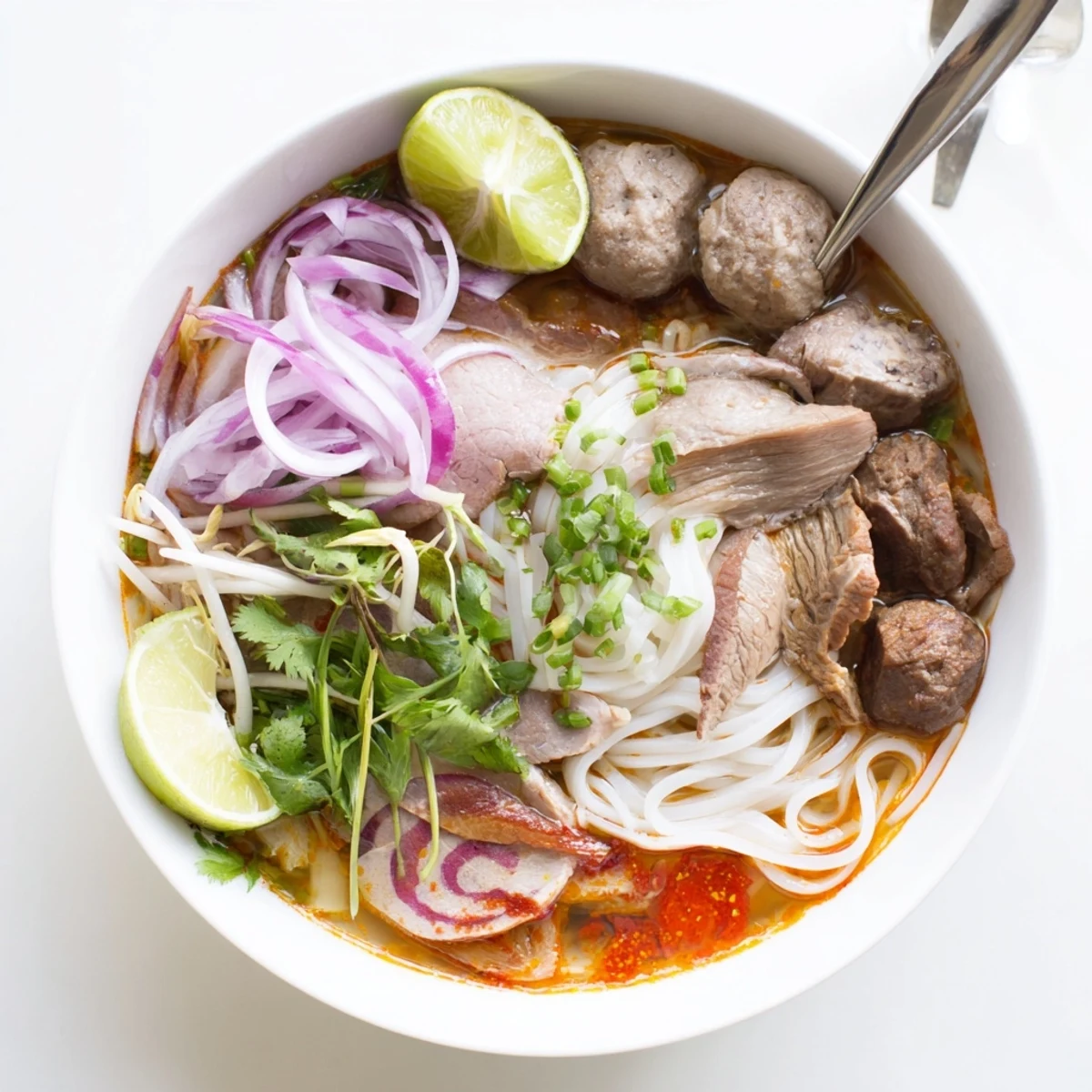
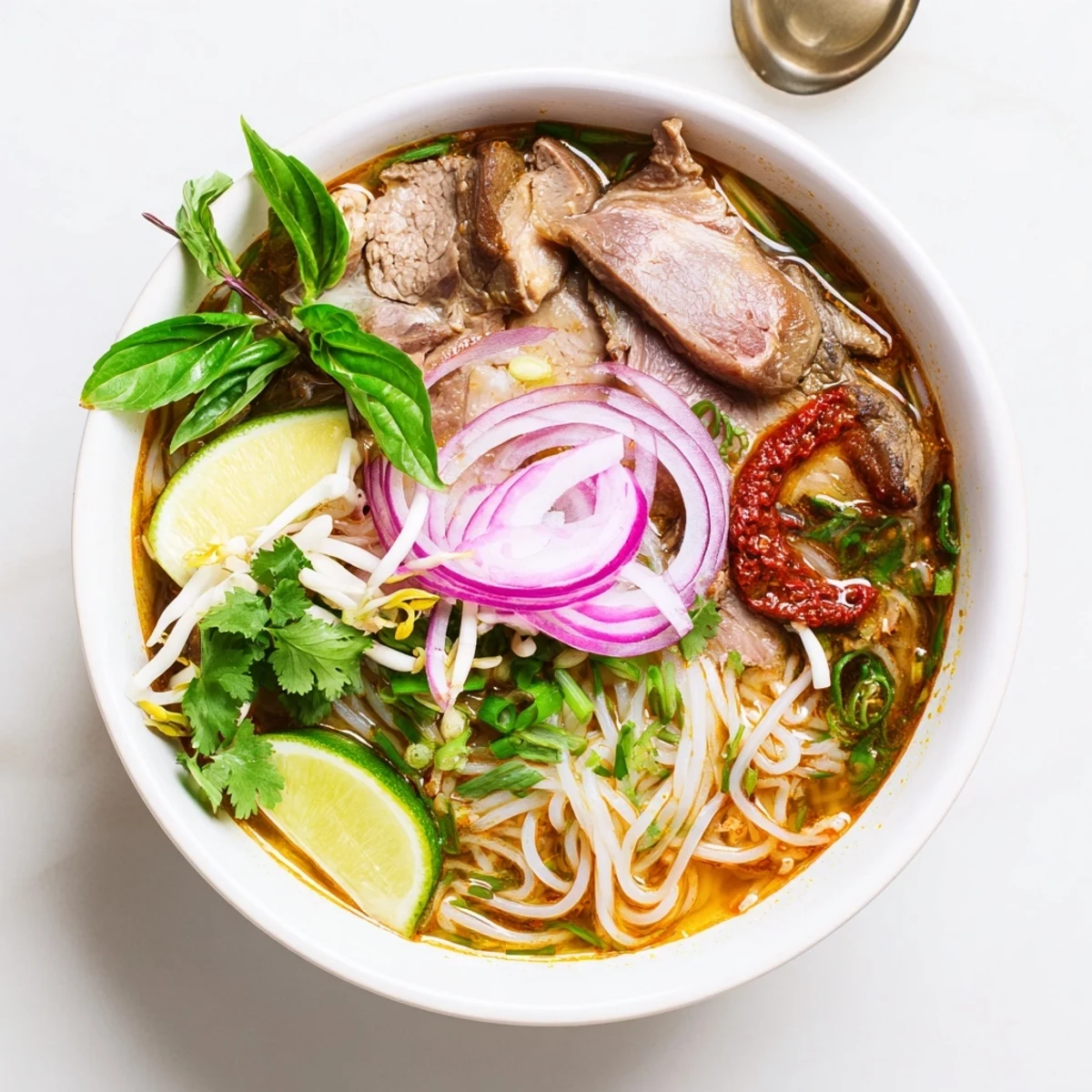
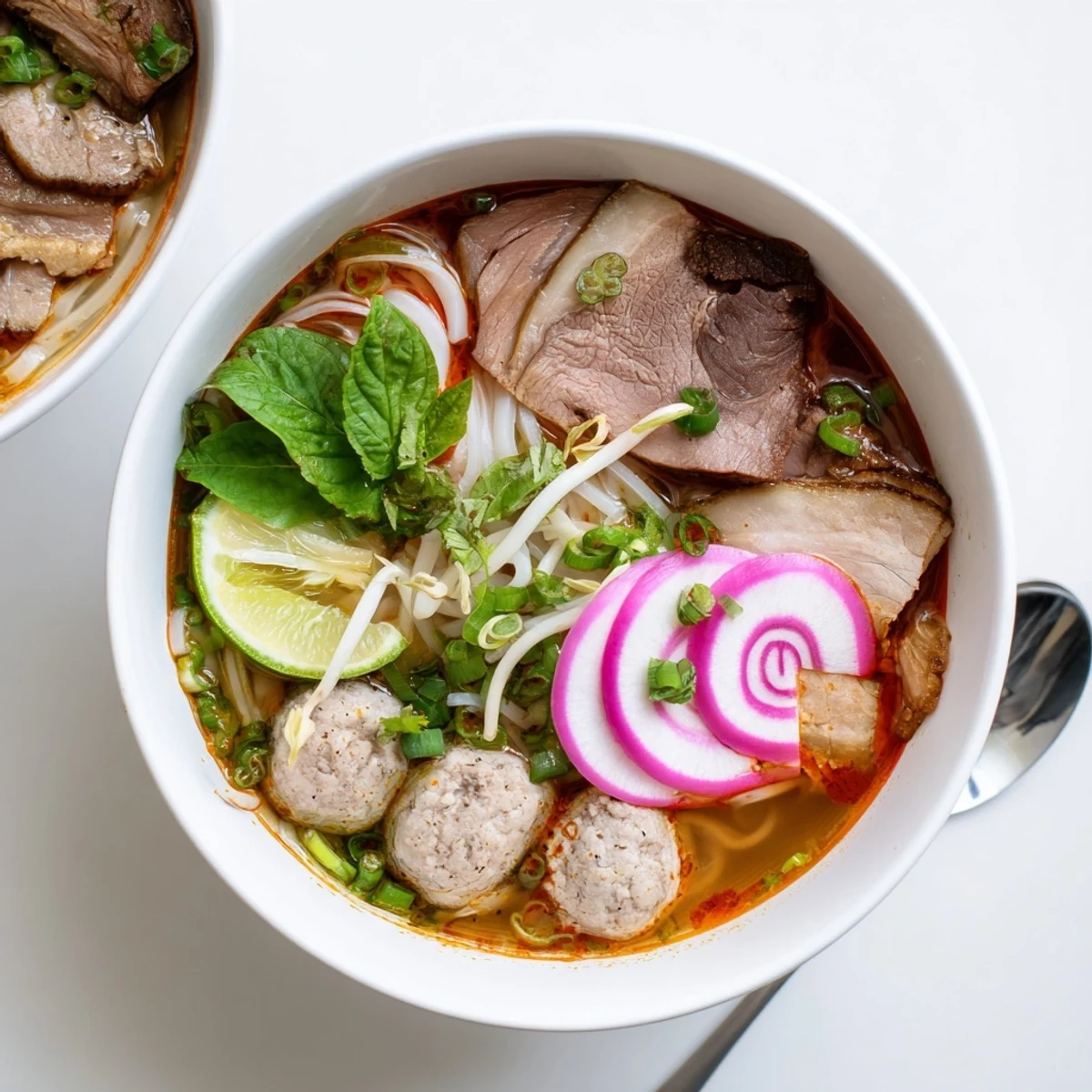
 This iconic central Vietnamese specialty delivers a complex harmony of spicy, savory, and aromatic elements. The rich broth simmers for hours with beef shank and pork hock, infused with bruised lemongrass, shrimp paste, and rock sugar for depth. Thick round rice noodles provide the perfect base, while tender beef slices, pork hock, and traditional Vietnamese sausage create satisfying texture. The signature comes from aromatic chili oil made with annatto seeds, adding both vibrant color and gentle heat. Fresh herbs like mint, Thai basil, and cilantro, along with lime wedges and bean sprouts, brighten each bowl. The result balances robust umami from shrimp paste with fragrant lemongrass and chilies, creating an unforgettable dining experience that captures the essence of Hue's royal culinary heritage.
The first time I had Bun Bo Hue was at a tiny family-run restaurant in Saigon where the owner refused to write down the recipe for anyone. She said the secret was in how you bruised the lemongrass and that you had to listen to the broth. I've been trying to recreate that bowl ever since, and this version comes pretty close to the magic she served.
Last winter, I spent three consecutive weekends tweaking this broth, testing different combinations of aromatics and timing. My apartment smelled so overwhelmingly of lemongrass and annatto oil that my neighbor knocked on the door thinking I was running a restaurant. Now she requests this soup whenever the temperature drops below 15 degrees.
Ingredients
- Beef shank and pork hock: These bone-in cuts create the rich foundation that makes this soup so satisfying
- Lemongrass: Bruise it well with your knife to release the aromatic oils that define this dish
- Shrimp paste: Dont skip this fermented treasure it adds an umami layer you cant get elsewhere
- Thick rice noodles: Bun Bo Hue noodles are rounder and chewier than regular pho noodles and they hold up beautifully in the spicy broth
- Annatto seeds: These give the chili oil its signature red-orange color without overwhelming heat
- Fresh herbs: The cooling contrast of mint basil and cilantro makes the spicy broth sing
Instructions
- Prepare the meat and start the broth:
- Bring the beef shank and pork hock to a boil in a large pot then drain and rinse thoroughly to remove any impurities that could cloud your broth
- Build the aromatic base:
- Refill with fresh water add the bruised lemongrass halved onion smashed garlic and ginger then bring everything to a rolling boil while skimming any foam that rises to the top
- Season and simmer:
- Lower the heat and stir in the fish sauce salt both sugars and the shrimp paste then let it simmer gently for 2 hours until the meat is fork tender and falling off the bone
- Finish the broth:
- Remove the meats and slice them into bite-sized pieces then strain the broth through a fine mesh discarding all the solids and tasting to adjust the seasoning if needed
- Make the chili oil:
- Heat the vegetable oil and annatto seeds until the oil turns a brilliant red then discard the seeds and sauté the shallots and garlic before stirring in the chili flakes
- Prepare the remaining elements:
- Cook the thick rice noodles according to package directions slice the brisket and cha lua and if using blood cubes simmer them gently for 10 minutes
- Assemble each bowl:
- Place a portion of noodles in each bowl and arrange the sliced meats on top then ladle the piping hot broth over everything and finish with a drizzle of that aromatic chili oil
- Add the finishing touches:
- Crowd each bowl with red onion slices lime wedges bean sprouts banana blossom and a generous handful of fresh herbs letting everyone adjust the heat with sliced chilies at the table
 Pin it
 This soup has become my go-to for dinner parties because people can customize their own bowls at the table. Watching friends discover their perfect balance of spicy broth tangy lime and cooling herbs is better than any restaurant experience.
Mastering The Broth
The real secret is patience during those first five minutes of boiling and rinsing the meat. This step removes all the impurities that would otherwise make your broth cloudy and less refined. I learned this the hard way after skipping it once and ending up with muddy broth that no amount of seasoning could fix.
Noodle Selection
Thick round rice noodles are nonnegotiable here. Regular pho noodles are too delicate and will turn to mush. I source mine from the Asian market and always cook them separately so they dont absorb too much broth before serving.
Serving Strategy
Set up the garnishes in small bowls family style and let everyone build their own final touches. The ritual of squeezing lime tearing herbs and adding that final drizzle of chili oil transforms this from dinner into an experience.
- Prepare all garnishes before you start assembling the bowls
- Keep the broth at a steady simmer so its piping hot when ladled
- Serve immediately once assembled so the noodles maintain their texture
 Pin it
 There is something deeply satisfying about a soup that commands this much attention and time in the kitchen. Every spoonful reminds me why some recipes are worth the effort.
Recipe Q&A
- → What makes Bun Bo Hue different from pho?
-
Bun Bo Hue originates from central Vietnam and features a spicier, more complex broth with lemongrass and shrimp paste, while pho has a milder anise and cinnamon-based broth. The noodles are also thicker and rounder, and the dish typically includes pork hock and spicy chili oil.
- → Can I make this without shrimp paste?
-
Shrimp paste provides essential depth and umami. If unavailable, substitute with extra fish sauce or fermented anchovy sauce, though the flavor profile will differ slightly from the authentic version.
- → How spicy should the broth be?
-
Traditional Bun Bo Hue has moderate heat from the chili oil. Adjust the amount of chili flakes and oil to your preference. The broth itself should have a gentle warmth rather than overwhelming spiciness.
- → What type of beef works best?
-
Beef shank with bone is essential for a rich, collagen-rich broth. For serving, brisket or flank works well. The combination of shank and pork hock creates the authentic texture and flavor.
- → Can I prepare the broth in advance?
-
Yes, the broth actually improves after resting overnight in the refrigerator. The flavors develop and meld together. Simply reheat and skim any fat from the surface before serving.
- → Are pork blood cubes necessary?
-
They're traditional but entirely optional. Many Vietnamese restaurants outside Vietnam omit them. The dish remains delicious without this ingredient.