
 Pin it
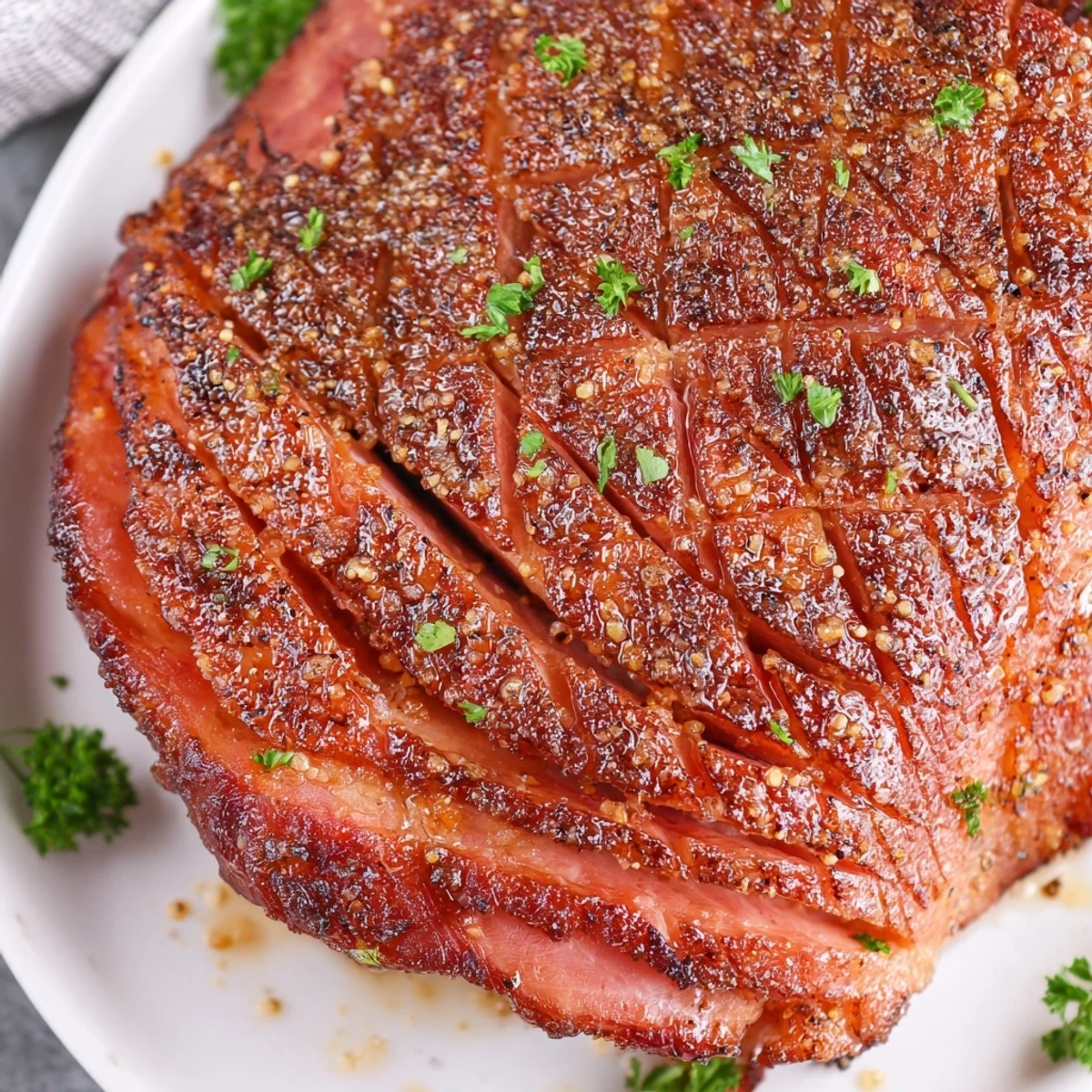
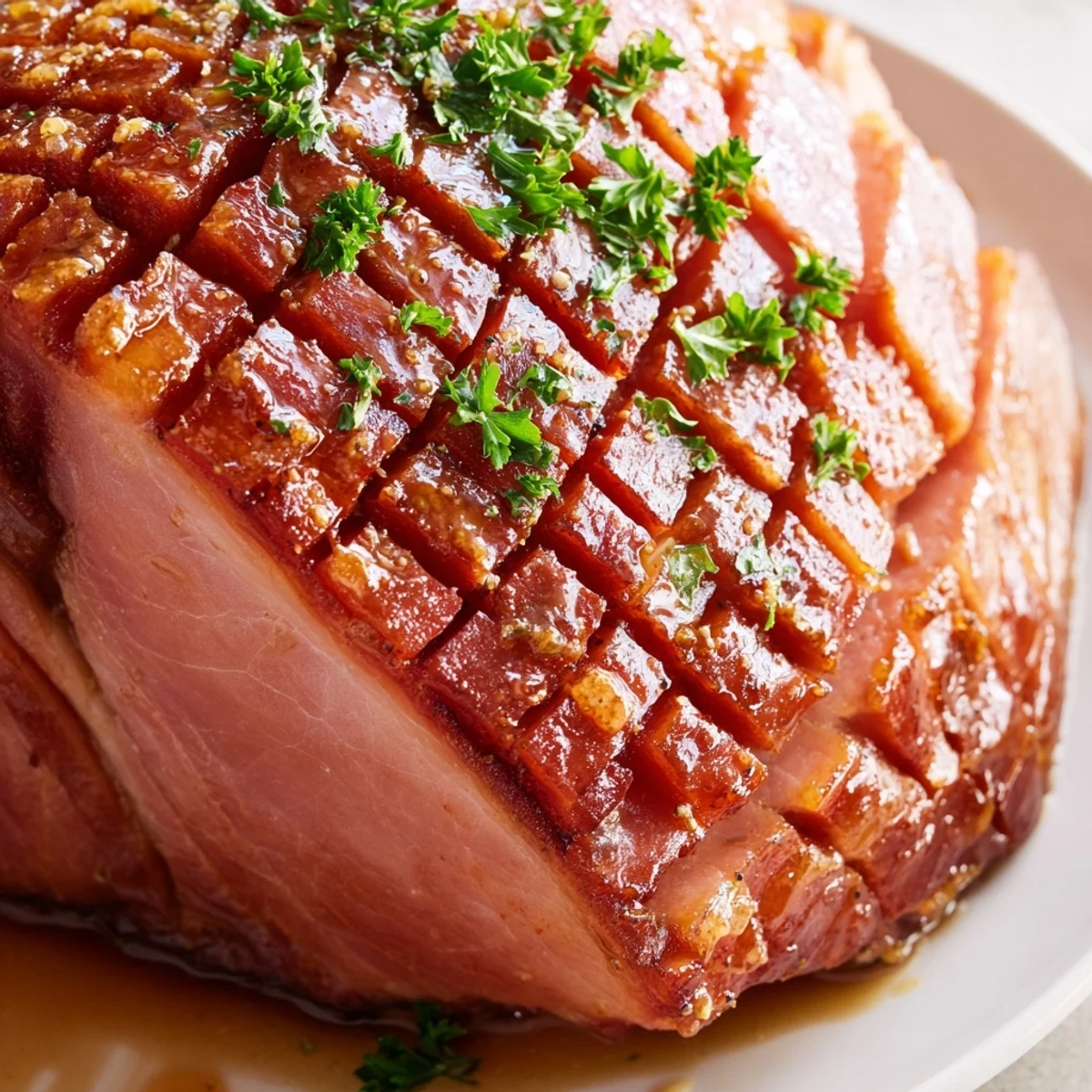
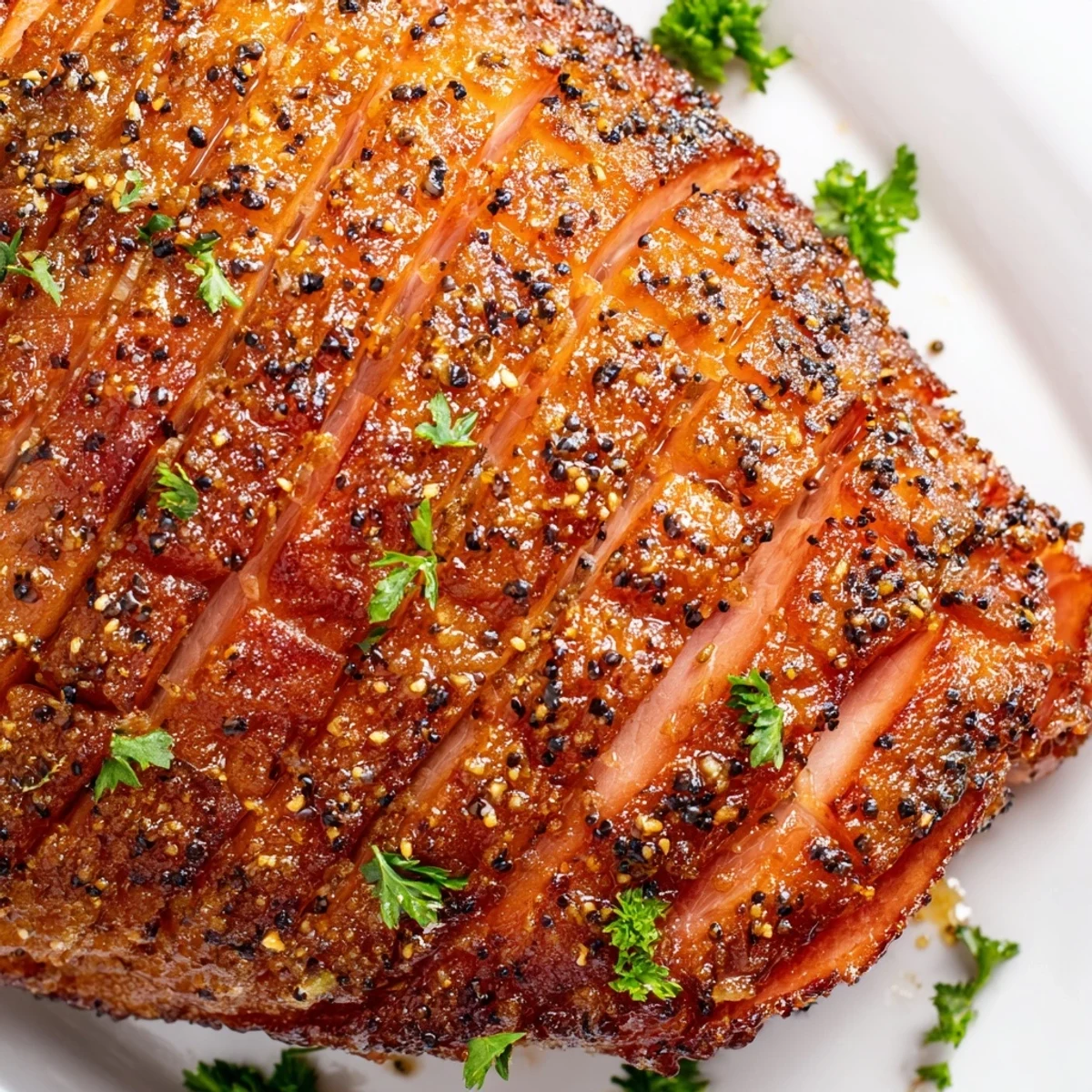
 This baked ham is slow-roasted to tender perfection, featuring a luscious glaze made from brown sugar, Dijon and whole-grain mustards, honey, apple cider vinegar, and a hint of ground cloves. The ham is scored for deep flavor absorption and glazed twice to develop a rich caramelized crust. Resting before slicing ensures juicy, flavorful servings. Perfect for family dinners or festive gatherings, garnished optionally with fresh parsley for a touch of color.
There's something about the smell of ham baking that fills a kitchen with pure celebration. Years ago, my aunt pulled a glistening ham from her oven with this incredible brown sugar-mustard glaze that caramelized into a lacquered mahogany shell, and I remember thinking that simple, honest cooking could feel like a feast. That glaze—sweet, tangy, with just a whisper of clove—became the reason I started baking ham myself for every gathering that mattered.
I made this for the first time during a snowy December when my brother was bringing his new partner home for dinner. I was nervous about impressing them, so I chose something foolproof—a baked ham—but elevated it with that glossy, professional-looking glaze. What I didn't expect was how the aroma alone would set the mood for the entire evening, or how my brother's partner would remember it months later as 'that incredible ham dinner.'
Ingredients
- Fully cooked bone-in ham (about 2.5 kg / 5.5 lbs): Buy from a quality butcher or grocery store—the bone-in variety stays moister and the bone adds body to any pan drippings you might save for gravy.
- Brown sugar (1 cup / 200 g): This is the foundation of your glaze, so don't skip it or substitute with white sugar; the molasses gives it depth and helps the glaze stick and caramelize.
- Dijon mustard (2 tbsp): This brings a sophisticated tang that balances the sweetness—it's the secret that keeps the glaze from feeling cloying.
- Whole-grain mustard (2 tbsp): The seeds add texture and a grainier, more rustic flavor that makes the glaze feel less refined in the best way possible.
- Apple cider vinegar (1/4 cup / 60 ml): This brightens everything and cuts through the richness; it's what keeps your guests reaching for seconds.
- Honey (2 tbsp): A touch of honey adds a floral note and helps the glaze develop that beautiful caramelized finish in the final bake.
- Ground cloves (1/4 tsp): Just a pinch, but it whispers 'holiday' in a way that feels timeless; respect the measurement here or it'll overpower everything.
- Fresh parsley, chopped (for garnish): A final shower of green on top transforms the presentation from impressive to unforgettable.
Instructions
- Set the stage:
- Preheat your oven to 160°C (325°F) and line a large roasting pan with aluminum foil—this isn't fussy, it's practical, making cleanup feel like a mercy after a meal this good.
- Position and score:
- Lay your ham flat side down in the pan, then use a sharp knife to cut a shallow crosshatch pattern into the surface, each cut about 1/2 inch deep. The scoring lets the glaze seep into the meat and creates those caramelized edges that make people pause mid-bite.
- Build the glaze:
- In a small bowl, whisk together your brown sugar, both mustards, apple cider vinegar, honey, and cloves until it comes together like a thick, mahogany-colored paste. Taste it if you're brave—it should make your mouth pucker slightly, then smooth out into sweetness.
- First coat:
- Using a pastry brush, paint half your glaze over the ham, letting it settle into those scored lines you just made. This first layer is your foundation, so don't be shy.
- Low and slow:
- Cover the ham loosely with foil and slide it into your oven for 1 hour and 15 minutes. You're not rushing this; you're letting the heat gently warm the ham through while the glaze begins its transformation.
- The final push:
- Remove the foil, brush the remaining glaze across the top, and crank the oven to 200°C (400°F). The high heat is what caramelizes that glaze into something shiny and dark and almost glossy—baste once more halfway through this 30-minute stretch if you remember.
- Rest and serve:
- When the glaze is bubbling at the edges and the top looks like burnished wood, pull the ham from the oven and let it rest for 10 minutes before slicing. This small pause makes every slice tender and gives you time to catch your breath before the applause.
 Pin it
 I learned early on that a baked ham can feel casual or ceremonial depending entirely on the effort you put into presentation. The first time someone brought a plate back to the kitchen and said, 'I've never had ham like this,' I realized I'd accidentally created something that made ordinary moments feel special.
The Art of the Glaze
What makes this glaze work is the conversation between sweet and sharp, the way brown sugar's molasses depth plays against mustard's assertive tang. I once tried cutting the vinegar down because I was worried it would be too strong, and the result was a one-note sweetness that felt heavy and forgettable. The vinegar, it turned out, was the hinge on which the entire flavor balanced—too little and you've got dessert, too much and you've got hot sauce, but measured right and you've got alchemy.
Making it Your Own
A friend of mine added pineapple rings to the ham in the final 30 minutes of baking, and they caramelized right alongside the glaze into jammy, concentrated sweetness. Another variation I've seen is studding the surface with whole cloves before the first glaze coat—they become little flavor bombs that people discover as they eat. The beauty of a baked ham is that it's forgiving enough to experiment with, confident enough that it doesn't need you to.
Serving and Storing
Serve this ham with roasted root vegetables or steamed green beans if you want to stay traditional, but honestly, a simple side salad is all you need because this glaze does the talking. The real magic happens the next day when you slice leftovers cold for sandwiches—the glaze hardens slightly and creates this perfect sweet-savory contrast against a soft roll and perhaps some sharp cheddar.
- Store leftover ham wrapped tightly in the refrigerator for up to 4 days, and it reheats beautifully covered in a low oven with just a splash of water.
- The ham bone makes exceptional stock if you simmer it with aromatic vegetables, giving you a second gift from a single meal.
- Always double-check your mustard and vinegar labels if serving to guests with gluten sensitivities, even though this recipe is naturally free of it.
 Pin it
 Baking a ham is one of those recipes that rewards you immediately and keeps giving long after dinner ends. It's the kind of dish that becomes a tradition without you planning for it to be.
Recipe Q&A
- → How do you prepare the ham for glazing?
-
Score the surface of the ham in a diamond pattern about 1/2 inch deep to allow the glaze to penetrate deeply.
- → What ingredients make up the glaze?
-
Brown sugar, Dijon mustard, whole-grain mustard, apple cider vinegar, honey, and a pinch of ground cloves create a sweet and tangy glaze.
- → How is the baking process structured?
-
The ham is first baked covered at a moderate temperature, then glazed again and baked uncovered at a higher heat to caramelize the glaze.
- → Can the ham be garnished before serving?
-
Yes, chopped fresh parsley adds a fresh, colorful garnish that enhances presentation.
- → What are some serving suggestions?
-
This ham pairs well with roasted potatoes or steamed green beans and makes excellent leftover sandwiches.